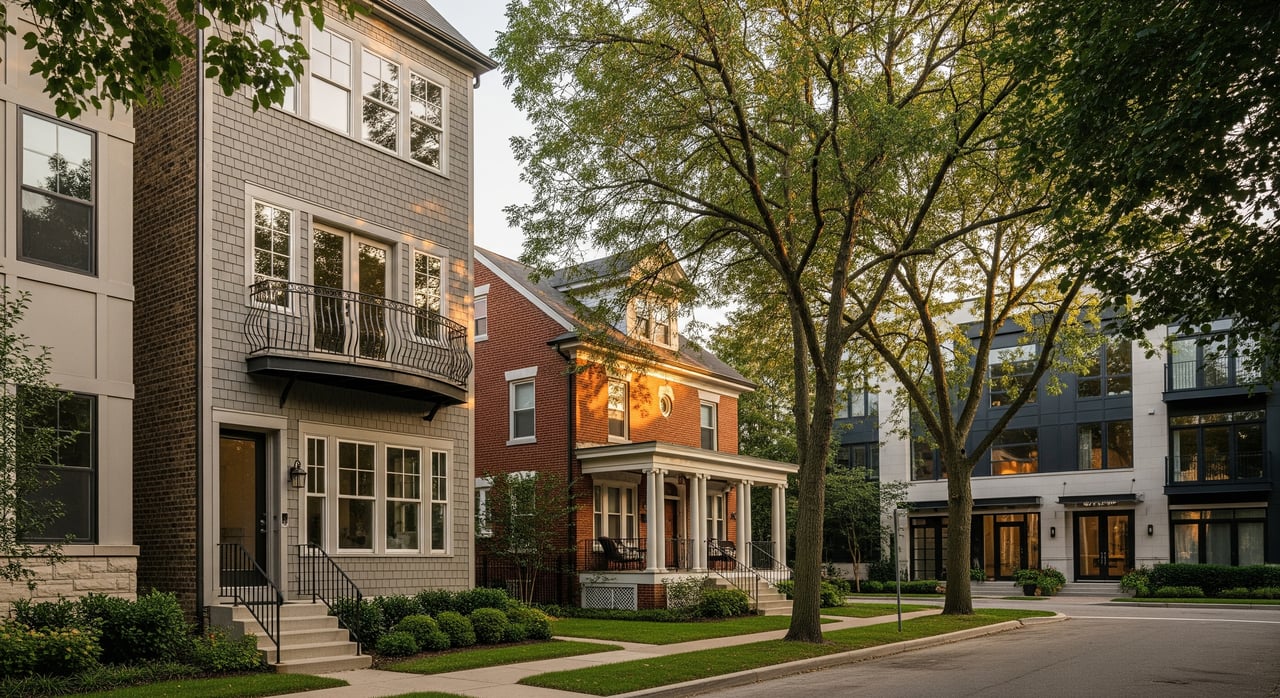
Trying to decide between a townhome, condo, or single-family home in Lakeview near Lake Decatur? You are not alone. Each option offers a different mix of cost, maintenance, and lifestyle. In this guide, you will learn how these property types differ in Illinois, what to watch for in Lakeview, and how to compare true monthly costs so you can choose with confidence. Let’s dive in.
Ownership basics in Illinois
Condo: unit plus shared spaces
A condo gives you ownership of the interior of your unit and a shared interest in the common areas. An association manages the building, collects assessments, holds a master insurance policy, and enforces rules. In Illinois, condo communities follow the Illinois Condominium Property Act, which outlines owner rights, disclosures, and governance.
Key items to review include the association budget, reserve fund, rules on rentals and pets, and any past or pending special assessments or litigation.
Townhome: two possible legal forms
Townhomes in Lakeview can be legally structured in two ways:
- Condo townhome. Ownership works like a condo, with an association handling exterior and common elements.
- Fee-simple townhome in a PUD or HOA. You own the land and structure, and the HOA may care for shared landscaping or amenities. Exterior maintenance can vary, so confirm responsibilities in the documents.
Listings often say “townhome,” but the legal form controls financing, insurance, and maintenance. Ask your agent to verify whether the property is a condominium or fee-simple home.
Single-family: fee-simple ownership
With a single-family detached home, you typically own the land and the structure. You control maintenance, improvements, and most rules unless the home sits in an HOA. You also carry full homeowner’s insurance and handle yard and exterior upkeep.
What to expect in Lakeview (Decatur)
Lakeview surrounds parts of Lake Decatur and offers older, established housing with demand from buyers who want lake access, walking paths, and neighborhood character. Proximity to the lake can increase appeal and also raise flood risk. Before you commit, check the FEMA flood map for the parcel and ask about any past flood claims.
Parking and storage can vary in older pockets. Confirm whether a property includes a garage, driveway, assigned spaces, or guest parking. If you are looking at a townhome, verify whether it is fee-simple or a condo association since that drives maintenance and insurance.
Market conditions change month to month. For a current snapshot, ask your agent to pull Lakeview or nearby ZIP-level data: median sale price and days on market for condos, townhomes, and single-family homes, plus active inventory and typical HOA ranges.
Costs and your monthly budget
Your monthly carrying costs will look different by property type. Build your budget with the following line items:
- Mortgage principal and interest
- Property taxes (monthly equivalent)
- Homeowner’s insurance
- HOA or condo assessments if applicable
- Utilities (electric, gas, water, sewer, trash)
- Routine maintenance reserve
- Special assessment reserve for condos and some townhomes
Property taxes in Macon County
Taxes are set by assessed value and local tax rates. Single-family homes often carry higher assessments due to the land component. Condos may be assessed differently, focusing on the unit. Check the Macon County Assessor for current taxes, exemptions, and assessment history for any parcel you are considering.
HOA fees and special assessments
Condo and many townhome associations charge monthly assessments that often cover exterior maintenance, landscaping, snow removal, common insurance, and reserves. In a Midwestern small-city context, typical dues often range from about 100 to 400 dollars per month, with higher fees for amenities. Ask for the last five years of fee history, any planned changes, reserve studies, and special assessment disclosures.
Insurance and flood considerations
- Single-family: you will carry a standard HO-3 homeowner policy that covers the structure, personal property, and liability.
- Condo: you will carry an HO-6 policy (walls-in) that covers interior finishes, personal property, and liability. The association’s master policy covers common elements and often the building envelope. Review both policies to avoid gaps.
- Townhome: insurance depends on legal form. If it is a condo association, coverage is similar to condos. If it is fee-simple, it is closer to a single-family policy. Confirm coverage in writing.
- Flood: near Lake Decatur, a lender may require flood insurance if the property sits in a FEMA flood zone. Verify the parcel’s flood designation early.
Financing and approval checks
Condo loans can follow different underwriting rules than single-family or fee-simple townhomes. Some loans require condo project approval, including FHA and VA programs. If a condo project is not approved, your loan options may be limited or require a larger down payment. Ask a local lender which Decatur condo communities are financeable and whether they accept them case by case.
For townhomes and single-family homes, financing is typically more straightforward unless the townhome is legally a condo. Whatever the property type, review association rental caps, owner-occupancy levels, and litigation, since they can affect financing.
On inspections, a condo inspection focuses on the unit interior plus any signs of building-wide issues. For single-family and fee-simple townhomes, include a full home inspection with attention to roof, exterior, drainage, and any lake-related water management.
Lifestyle and maintenance tradeoffs
- Privacy and space. Single-family homes usually offer the most privacy, yard space, and storage. Townhomes often provide more space than condos and may include small yards. Condos typically have the least private outdoor space but the lowest exterior maintenance.
- Predictability of costs. Condos and some townhomes offer predictable dues but carry risk of special assessments. Single-family homes have variable expenses and larger capital projects, but you control timing and scope.
- Amenities and convenience. Condos and townhome communities may include landscaping, snow removal, on-site maintenance, and amenities. This can be ideal if you want lock-and-leave living.
- Parking and storage. Confirm garages, assigned spaces, street permits, and guest parking. Storage lockers or sheds vary by property and association rules.
- Noise and community. Shared walls in condos and townhomes can mean more sound transfer. Review community rules and ask about enforcement.
Resale and rental rules
Resale timelines and demand can differ by property type. In some markets, condos are more sensitive to interest rate swings and association health. Strong reserves, clear rules, stable dues, and no major litigation help values.
Associations may limit rentals by percentage, set minimum lease terms, or require tenant approvals. Short-term rentals may be restricted by local ordinances or association rules, especially near the lake. If you plan to rent now or later, confirm the rules before you buy.
Quick comparison: what fits your goals
| Factor | Condo | Townhome | Single-Family |
|---|---|---|---|
| Ownership | Unit interior plus share of common elements | Varies: condo or fee-simple | Fee-simple land and structure |
| Exterior maintenance | Often by association | Depends on documents | Owner responsibility |
| Monthly dues | Yes; cover common costs and reserves | Often; varies by scope | Possible if in HOA, otherwise none |
| Insurance | HO-6 plus association master policy | Condo form: HO-6; Fee-simple: HO-3 | HO-3 homeowner policy |
| Predictability | More predictable dues; special assessment risk | Mixed; check reserves and scope | Variable costs, full control |
| Lifestyle | Low-maintenance, amenities | Space plus lower exterior work | Max privacy, yard, storage |
Buyer checklists you can use
Condo and townhome checklist
- Confirm legal form: condo or fee-simple, and what the HOA maintains.
- Request documents: declaration, bylaws, rules, budget, reserve study, insurance certificates, last 12 months of meeting minutes, and litigation disclosures.
- Ask about rental caps, pet policies, parking, and what utilities are included in dues.
- Review five-year dues history and any planned or pending special assessments.
- Verify insurance responsibilities: master policy versus owner policy.
- Check FEMA flood zone status and any past flood claims.
Single-family checklist
- Confirm lot lines, easements, and drainage patterns.
- Check roof, siding, windows, foundation, and mechanical systems age.
- Review Macon County tax bill and assessment history.
- Ask about municipal services, well or septic if applicable, and any neighborhood covenants.
- Verify floodplain status near Lake Decatur.
Your next steps in Lakeview
- Align budget and loan pre-approval with your preferred property type and expected dues.
- Pull a current market snapshot for condos, townhomes, and single-family homes in Lakeview or nearby ZIPs.
- Check FEMA flood maps for any property near Lake Decatur and discuss flood insurance with your lender and insurer.
- For condos and townhomes, collect association documents up front and review reserves and rules before you make an offer.
- Schedule a thorough inspection that matches the property type and location.
If you want a clear, side-by-side shortlist that fits your goals and budget, our team is here to help you compare options and move forward with confidence. Reach out to The JG Group for a friendly, data-informed consultation.
FAQs
What is the main legal difference between a condo and a townhome in Lakeview?
- A condo is unit ownership plus shared common areas under an association, while a townhome can be either a condo form or fee-simple ownership. The legal form controls maintenance, insurance, and financing.
How do HOA dues typically work for Lakeview condos and townhomes?
- Dues commonly cover exterior upkeep, landscaping, snow removal, common insurance, and reserves. Expect a range near 100 to 400 dollars per month in similar Midwestern markets, with higher fees for amenities.
Do I need flood insurance near Lake Decatur?
- If the home is in a FEMA flood zone and you finance with a lender, flood insurance is usually required. Always check the parcel’s flood designation and ask about past claims.
Are condos harder to finance than single-family homes?
- Sometimes. Many lenders require condo project approval, and some programs like FHA or VA may limit options if the project is not approved. Townhomes and single-family homes are often simpler unless the townhome is legally a condo.
What documents should I review before buying a condo or townhome?
- Ask for the declaration, bylaws, rules, budget, reserve study, insurance certificates, recent meeting minutes, and litigation disclosures, plus parking rules and any special assessment notices.
How do property taxes compare between condos and single-family homes?
- Single-family homes can have higher assessed values due to land, while condos focus on the unit. Always verify taxes and exemptions with the Macon County Assessor for the specific property.