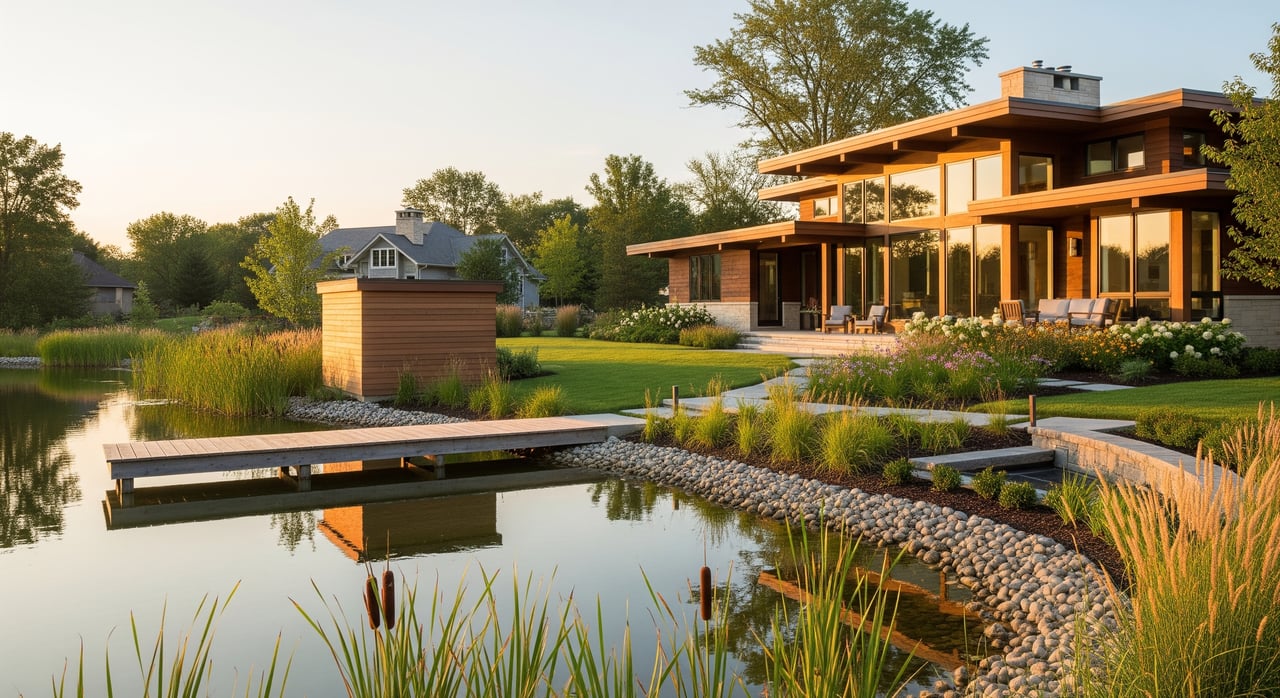
Love the idea of morning coffee by the water? In Vernon Hills, many neighborhood ponds are more than pretty views. They are part of the local stormwater system and come with care, rules, and shared responsibilities. If you are buying a pond‑side home or already own one, knowing what to maintain and who to call helps you protect your shoreline, your budget, and your peace of mind. This guide covers ownership, seasonal care, algae and safety issues, permits, costs, and trusted local contacts. Let’s dive in.
Confirm ownership and roles
Before you trim plants or schedule treatments, confirm who owns and maintains the pond. In Vernon Hills, some ponds are Village owned or leased, some are HOA assets, and others are fully private.
Village‑owned or leased ponds
- The Village’s Public Works & Engineering oversees stormwater management and can advise on public ponds and outlets. Start with the Village’s resource page for contacts and guidance: Vernon Hills Public Works & Engineering.
- For Village ponds, the Adopt‑A‑Pond program funds core algae and invasive control and offers a 50/50 cost‑share for additional treatments.
HOA or private ponds
- HOAs or owners are usually responsible for routine care, repairs, and contractor oversight. Large projects that alter banks, outlets, or the pond bottom can require permits.
- For dredging, structural shoreline work, or bed/bank changes, check early with the Lake County Stormwater Management Commission: SMC permits and approvals. Many in‑water projects also need Illinois EPA 401 certification when a federal permit is involved: Illinois EPA 401 Water Quality Certification.
Seasonal maintenance essentials
Routine inspections (year‑round)
- Keep inlets, outlets, and spillways free of debris so design water levels and flows work as intended.
- Watch for nuisance algae, dense plant mats, erosion, or signs of fish stress.
Spring prep
- Remove winter debris, inspect banks, and service aeration or fountains if installed.
- Check basic water chemistry if possible to set a baseline for the season.
Summer watchouts
- Warm weather can trigger algae and low oxygen. Maintain aeration where installed and reduce nutrients entering the water.
- If you suspect a harmful algal bloom, avoid contact and keep pets out. Learn signs and next steps from the U.S. EPA HABs guidance.
Fall prep
- Skim leaves and organic matter to limit nutrient buildup.
- Inspect shorelines and plan any planting or stabilization work for spring.
Winter safety
- Be cautious around ice. Aeration can create thin ice areas. Avoid walking on ice unless you have confirmed thickness using published safety guidance.
Protect shorelines and reduce runoff
Healthy shorelines keep water clear, banks stable, and maintenance costs lower.
- Plant a native buffer of about 10 to 20 feet along the water’s edge to filter nutrients, discourage geese, and reduce erosion. Lake County outlines benefits and plant ideas here: Native plant buffer guidance.
- Use soft stabilization first when feasible, like native plantings and coir logs. Structural work such as extensive riprap or walls often requires permits through SMC.
- Minimize fertilizer near the pond, pick up pet waste, and control erosion on adjacent lawns and beds.
Algae, mosquitoes, and invasives
- Harmful algal blooms can appear as paint‑like scums or thick green mats. The EPA recommends avoiding contact, keeping pets out, and testing when blooms are suspected. See HABs basics and safety.
- Chemical control is regulated. In Illinois, parcel owners may use registered, non‑restricted aquatic herbicides on bottoms they own, but drift, neighbor impacts, and safety labels matter. Lake County recommends licensed applicators. Review Lake County’s herbicide FAQ and use the Village’s Adopt‑A‑Pond program for Village ponds.
- Prevent the spread of invasives by cleaning gear and never moving plants or animals between waters. Learn priority species and reporting steps from Illinois Extension’s aquatic invasives page.
Permits and project costs
- Permits are commonly needed for dredging, altering outlets or dams, and structural shoreline work. Start with Lake County SMC permits and coordinate with Illinois EPA for 401 certification when federal permits apply.
- Dredging costs vary with access, volume, and disposal. Consumer and industry sources show small projects often fall from a few thousand dollars into the tens of thousands. See ballpark figures in this overview of pond dredging costs, then get multiple local bids and a volume estimate before deciding.
Smart next steps for Vernon Hills homeowners
- Confirm pond ownership through your deed, HOA, or the Village. Use Public Works & Engineering for Village stormwater features.
- Document issues with photos and dates, then tackle source control: buffers, debris removal, and runoff reduction.
- For public ponds, explore the Village’s Adopt‑A‑Pond cost‑share before hiring independent vendors.
- For dredging or structural work, contact Lake County SMC early about permits and approvals.
- Consider water quality monitoring and technical help from Lake County Ecological Services.
- Hire licensed aquatic professionals for in‑water treatments and ensure contractors carry permits and insurance.
If you are weighing a pond‑side home in Vernon Hills, we can help you evaluate maintenance needs, resale considerations, and nearby comparables so you buy with confidence. For thoughtful, neighborhood‑focused guidance, connect with The JG Group.
FAQs
Who maintains my Vernon Hills neighborhood pond?
- Check your deed and HOA documents. If the pond ties into public stormwater, contact the Village’s Public Works & Engineering team to confirm responsibility and available programs.
Can I treat algae myself in Lake County?
- Sometimes. If you own the pond bottom and use a registered, non‑restricted aquatic product, private treatment can be legal. Because of drift, exposure, and neighbor impacts, licensed applicators are recommended. For Village ponds, use Adopt‑A‑Pond rather than treating on your own.
How often do ponds need dredging?
- It varies by watershed and sediment load. Many ponds need dredging somewhere in the 5 to 15 year range. A bathymetric and sediment survey helps estimate timing and cost.
Will aeration solve algae problems?
- Aeration supports oxygen and beneficial microbes, which reduces conditions that favor nuisance blooms. It helps, but it is not a stand‑alone cure for nutrient‑driven algae. Pair aeration with nutrient control and shoreline buffers.
Are pond algae or mosquitoes a health risk?
- Harmful algal blooms can produce toxins, so avoid contact and keep pets out if you see scums or strong odors. Follow local mosquito guidance, reduce standing water, and use repellents as advised.