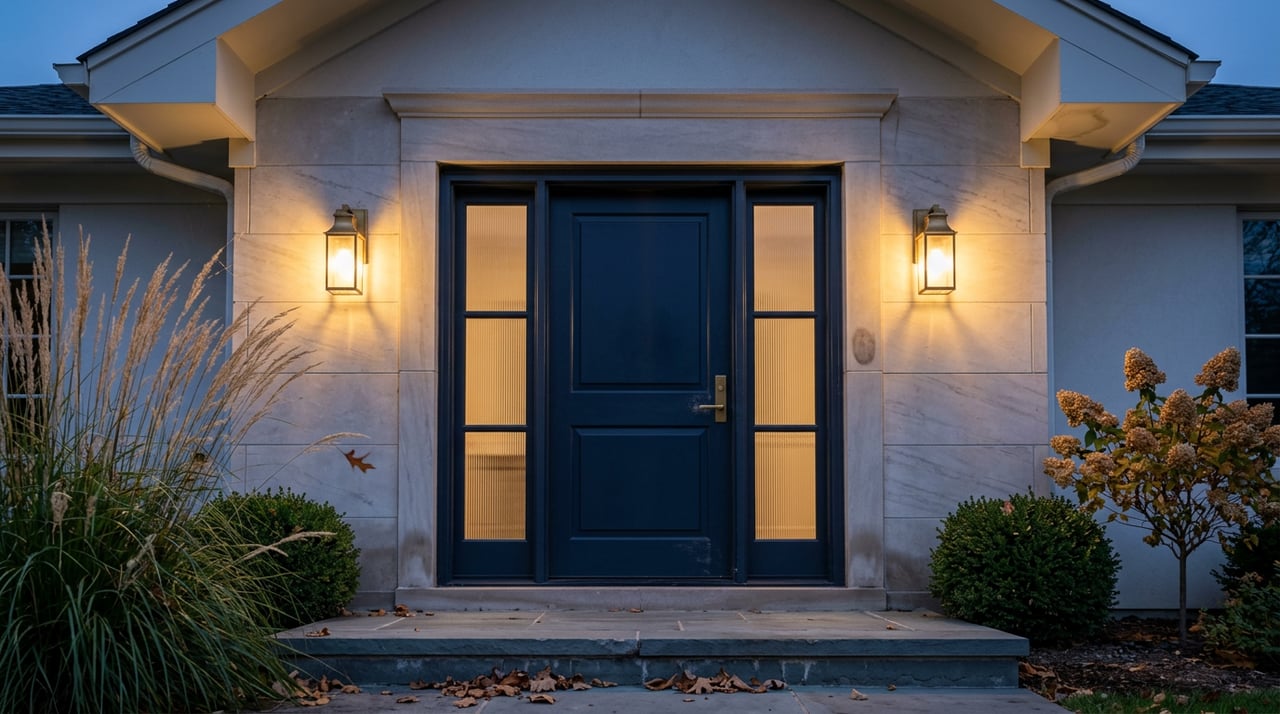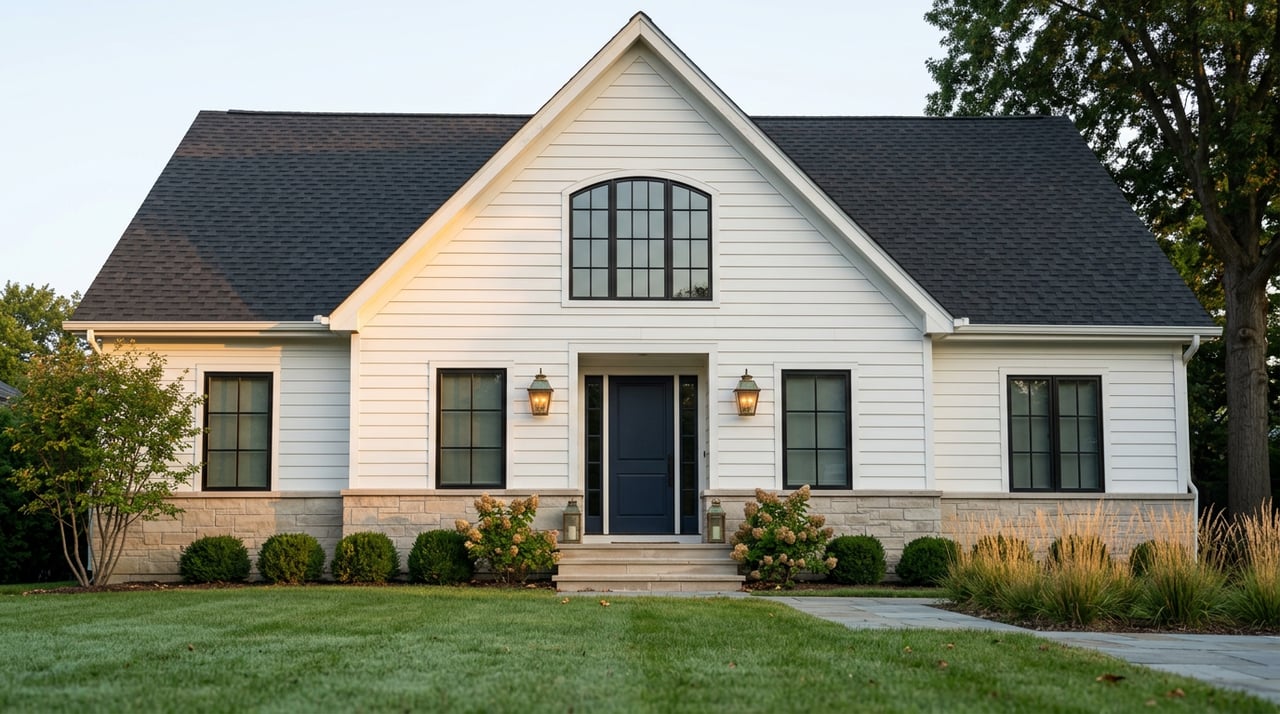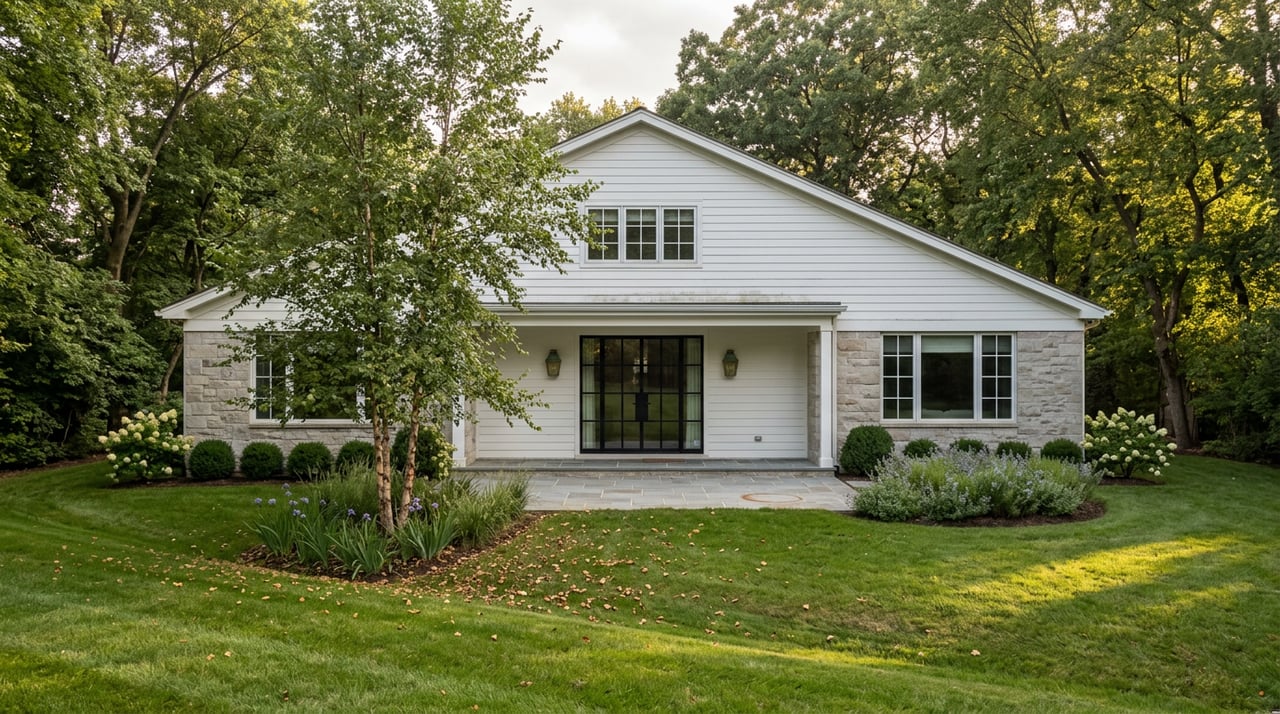
Picture two mid-century ranches a few blocks apart in Northbrook, both turning up the same finding on inspection day: a gravity-fed sanitary line with no backup protection against sewer backup during heavy rain. On one, the seller can hand over a Village permit showing the line was already converted to an overhead system, inspected and signed off. On the other, nobody has looked at it since the house was built. Same finding, same neighborhood, same era of construction. One is a footnote. The other is a renegotiation.
The finding itself never decides the outcome. Whether the seller can produce paperwork does.
That's the pattern worth understanding if you're buying or selling in Northbrook right now. The inspection isn't really testing whether your house has problems. In a village built out in three distinct waves, most houses of a given age have the same three or four problems, because those problems are a function of when the neighborhood went up, not how carefully anyone maintained it since. What the inspection actually tests is whether the seller already dealt with it and kept the receipts.
The Findings That Repeat, House After House
Local inspectors describe Northbrook's housing stock as a fairly predictable set of eras, and each one leaves its own fingerprint on an inspection report. Homes from the primary 1960s build-out commonly still carry galvanized steel supply lines showing internal corrosion and reduced water flow. Split-level houses from that same era have multi-pitch rooflines with the kind of valleys and transitions where ice dams and flashing failures concentrate. Houses from the 1980s expansion period sometimes still carry polybutylene water supply piping, a material prone to sudden fitting failure that inspectors flag on sight.
Layered on top of the plumbing and roofing issues is the electrical picture. Homes built or expanded between 1965 and 1973 anywhere in the country are more likely than houses from other eras to carry aluminum branch wiring, a cost-saving substitution for copper that became common when copper prices spiked. Federal Pacific Electric panels, sold under the Stab-Lok name from the early 1950s through the mid-1980s, ended up in millions of homes nationally because they were cheap and compact, favorites of developers building large postwar subdivisions. None of this is unique to Northbrook. What's unique is how concentrated it is here, because a large share of the village's housing stock was built in exactly that window, and it sits on flat, glacial-till ground that adds its own set of concerns on top.
Large lots with mature trees add one more predictable item: root pressure on old cast-iron sewer laterals, which is why a sewer scope camera inspection is a common add-on for older Northbrook properties rather than an exotic upsell.
The Village Already Built a Paper Trail. Ask for It.
Here's where Northbrook gets specific in a way that matters at the negotiating table. The Village of Northbrook has run an Overhead Sanitary Sewer Cost Participation Program since shortly after a major flood event, reimbursing homeowners for up to 50 percent of the cost, capped at $5,000, to convert a gravity sewer to an overhead system that protects against backups during heavy rain. The program isn't open to every house. Local plumbing contractors who administer these conversions note that eligibility is tied to homes built before 1965, which lines up almost exactly with the same construction era producing the galvanized pipe and aluminum wiring findings above.
If a seller's home qualifies and they never used the program, that's a data point for a buyer's inspection negotiation. If they did use it, that's the opposite: a documented capital improvement, verified by Village inspection, sitting in municipal records. A seller who converted to an overhead sewer under this program isn't handing a buyer a maybe. They're handing over proof that real money, matched by the Village, went into solving the exact problem an inspector is likely to flag.
There's a wrinkle worth knowing if you're eyeing a Northbrook property as a teardown candidate. The program's terms require that if the property is demolished within five years of the Village's reimbursement, the homeowner must refund the money. A buyer who plans to tear down and rebuild should ask directly whether a recent overhead sewer conversion happened on the lot, because that refund obligation can follow the property into a sale depending on how it's structured. It's the kind of detail that never shows up on a listing sheet and rarely comes up until someone asks.
Why the Flood History Matters More Than the Weather Forecast
Northbrook is named for the fork of the Chicago River that runs through it, and that river is the reason flood protection isn't an abstract concern here. A storm in September 2008 dropped 6.4 inches of rain on the village and triggered widespread flooding, the same event that pushed the Village Board to authorize both the overhead sewer program and a companion 50/50 Drainage Program for yard flooding, offering reimbursement up to 30 percent for pipe and drain projects and up to 70 percent for natural solutions like swales and rain gardens. Other storms since then, including 5.25 inches in July 2011 and 4 inches in April 2013, kept the issue current enough that these programs are still active today, not legacy relics from a single bad year.
For a buyer, this means a flat lot in Northbrook isn't automatically a safe lot. Reverse-sloped driveways, a common feature in denser sections where there wasn't room for a detached garage, create a real flood risk by directing overland stormwater toward the house rather than away from it. For a seller, it means a pre-listing inspection that documents drainage conditions, or better, a completed drainage improvement with Village permits on file, turns a potential red flag into a settled question before a buyer's inspector ever shows up.
What the Radon Number Actually Means Here
Cook County sits in EPA Radon Zone 2, a designation that predicts moderate indoor screening levels between 2 and 4 picocuries per liter. Locally submitted test data for Northbrook's 60062 zip code puts the average measured level at 6.20 pCi/L, well above the EPA's 4.0 pCi/L action threshold. The reason isn't mysterious. Northbrook sits on glacial till deposits over limestone bedrock, geology that creates ideal conditions for radon migration into the full basements common across the village's postwar housing stock.
A short-term radon test typically runs $150 to $250 and is usually bundled into the home inspection itself, with results back within a few days. If levels come back elevated, mitigation systems generally run between $780 and $1,250 to install, and that cost is almost always negotiated as part of the sale rather than absorbed quietly by either party. Because the average local reading already sits above the action level, a buyer who skips radon testing in Northbrook isn't avoiding an unlikely problem. They're skipping the test most likely to come back elevated.
What This Means If You're Transacting in Northbrook Right Now
None of this is a reason to avoid an older Northbrook house. It's a reason to treat the inspection differently depending on which side of the transaction you're on.
If you're selling a home built before 1980, a pre-listing inspection isn't an extra step. It's the fastest way to convert predictable findings into a documented story instead of a surprise negotiation. If you already used the Village's overhead sewer or drainage programs, pull the permit records now, before an offer is on the table. If you haven't and your home qualifies, it's worth weighing whether to complete the conversion before listing or price the home with that gap in mind.
If you're buying, ask two questions before you fall in love with a listing: does this house qualify for the Village's overhead sewer program based on its construction date, and if so, has that work already been done. Then request a sewer scope and a radon test as standard parts of your inspection, not optional add-ons, because in this specific market both are more likely than not to find something.
The house isn't lying to you. The question is whether the paperwork backs it up.
If you're weighing a purchase or a listing in Northbrook and want a read on how a specific property's age and location line up with these programs, the JG Group can walk through what that means for your timeline and your offer. Request a free consultation and let's look at the paper trail together before you're negotiating against a surprise.
A Few Questions Worth Asking First
Does every older Northbrook home need radon mitigation? Not automatically, but the local average test result sits above the EPA's action threshold, so a short-term test during inspection is the only way to know where a specific house falls.
Is overhead sewer conversion required to sell a home in Northbrook? No. It's a voluntary Village cost-share program limited to homes built before 1965. A seller who completed it has documentation worth surfacing during negotiations, and a seller who hasn't isn't in violation of anything, just working from a different starting point at the table.
Do newer Northbrook homes skip these issues entirely? Mostly yes for the plumbing and electrical findings, since those are tied to specific construction eras. Radon risk and flood exposure are tied to geology and lot grading rather than build year, so both are still worth testing regardless of when the house went up.